Creatine for Women: What It Does, and What It Doesn’t
Every reel says creatine is for muscle, bone, and brain. The evidence does not split evenly across those three. Dr. Shad Abdulla, ND, breaks down which claim has Tier 1 support, which one rests on a single small trial, and which one the largest two-year study could not confirm, plus the dose and safety notes that actually matter.
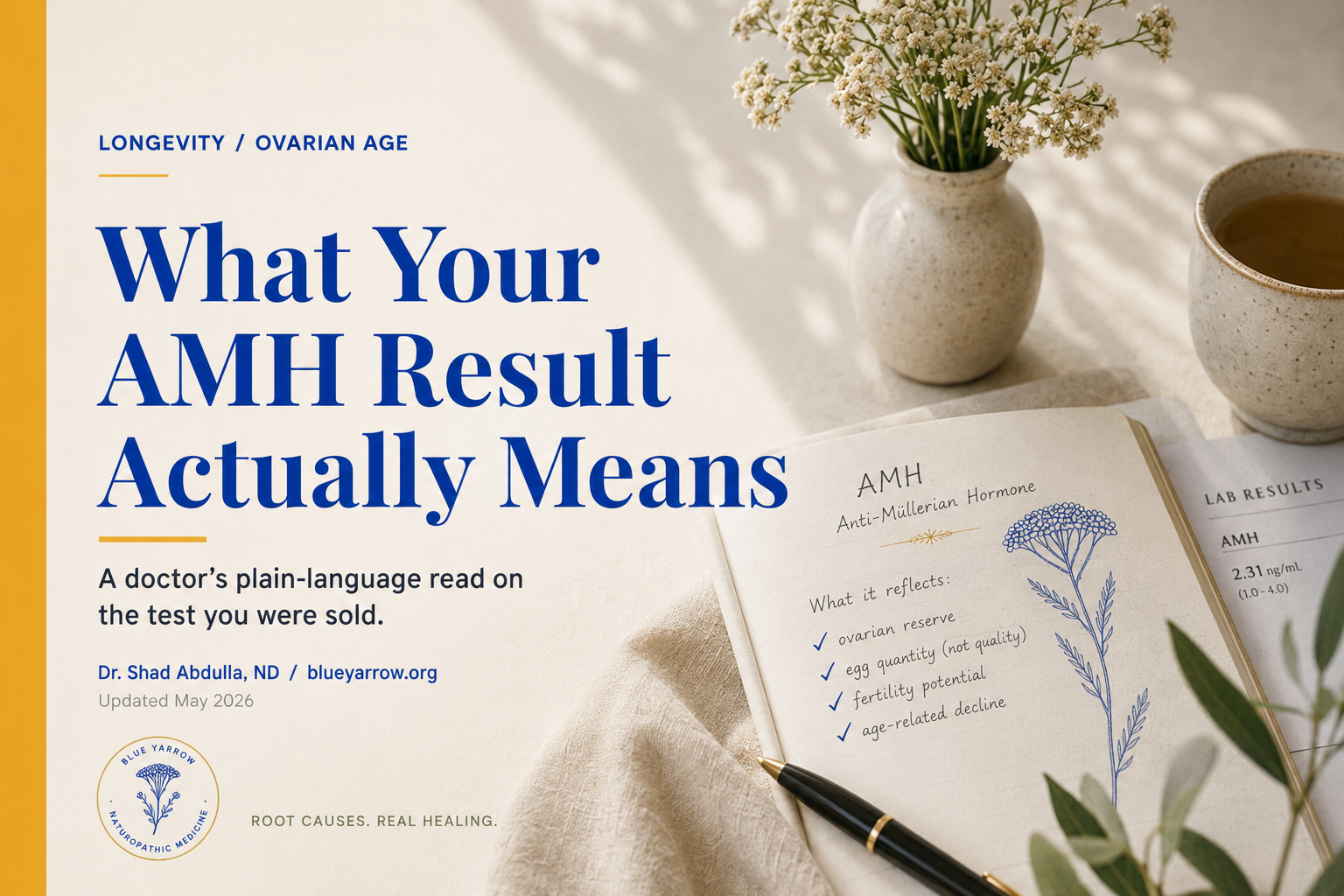
What Your AMH Result Actually Means (Updated May 2026)
AMH is being pitched as a longevity score or an "egg count." It's neither. AMH is useful in a narrow set of clinical scenarios, but the lab value isn't a verdict on your fertility or biology. Here's when ovarian age testing earns its place, when it doesn't, and the four questions worth bringing to your next appointment.
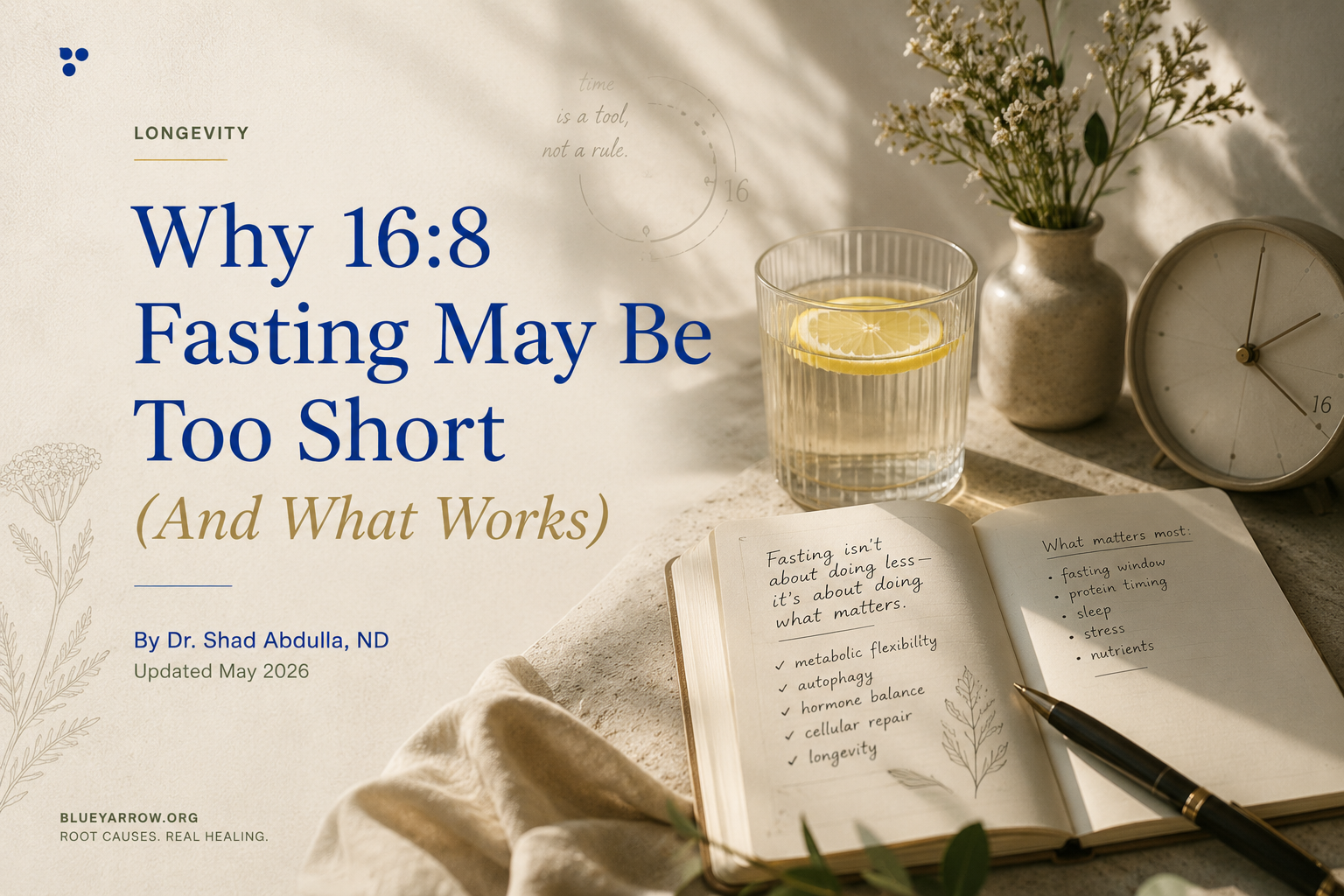
Why 16:8 Fasting May Be Too Short (And What Works)
16:8 has become the default intermittent fasting protocol, but the evidence on whether it actually moves the needle on autophagy, metabolic flexibility, and longevity is thinner than the hype. Fasting isn't about doing less. It's about doing what matters. Here's why 16:8 may be too short for the outcomes you want, and what the research suggests about fasting windows, protein timing, and chrononutrition.
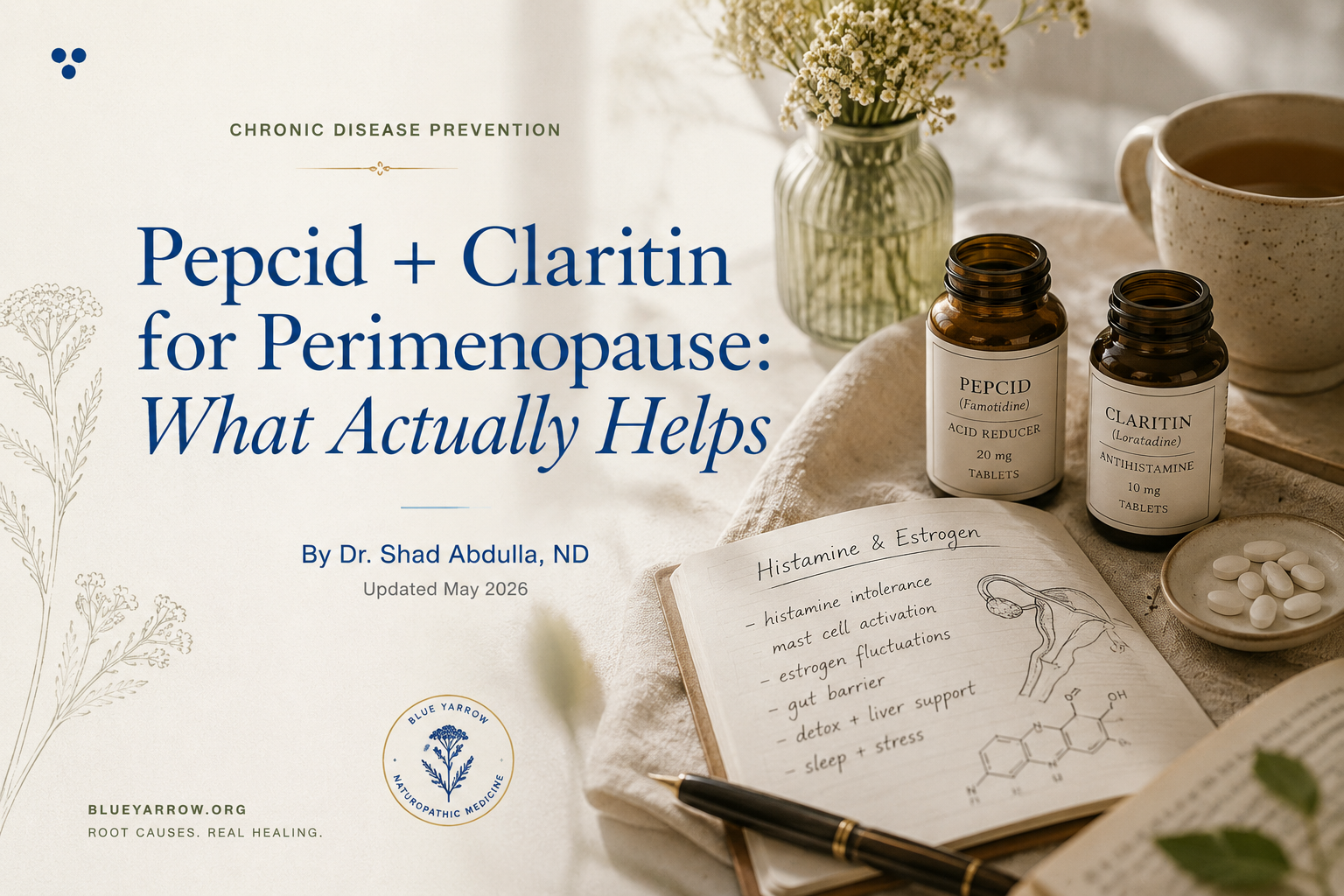
Pepcid & Claritin for Perimenopause: What Actually Helps
The Pepcid + Claritin combo has been trending on TikTok as a perimenopause fix. The mechanism is real — estrogen fluctuations affect mast cell activation, and combined H1 + H2 blockade can take the edge off histamine symptoms. But pills aren't the whole answer. Here's the histamine-estrogen connection in plain terms, what the OTC combo actually does, and the root-cause work that addresses why the symptoms started in the first place.