Normal Labs, Still Shedding: What “Normal” Misses
Your hair-loss labs came back normal, and you are still shedding. Here is what normal misses: in-range is not optimal, most women shedding have normal hormones, and no number on a chart is a promise of regrowth. The honest checklist to bring to your next appointment."
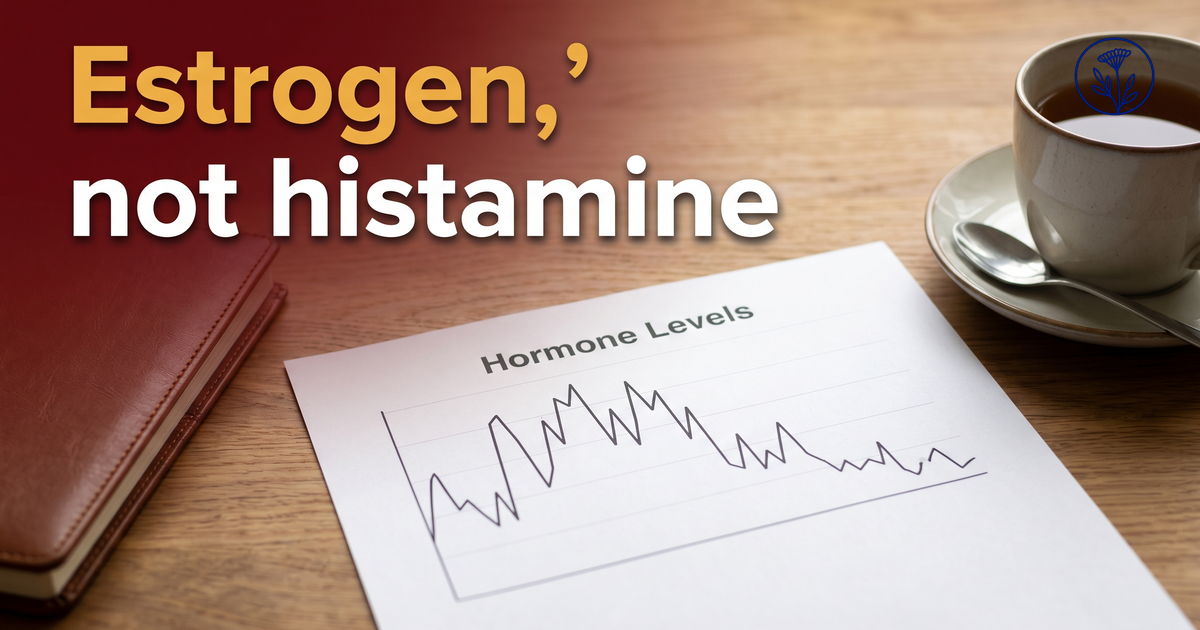
Perimenopause Migraine: It’s Estrogen, Not Histamine
Your migraines used to track your period, and now they show up whenever they want. The wellness internet blames histamine. The evidence points somewhere cleaner: estrogen withdrawal. Here is what actually drives perimenopause migraine, where histamine honestly fits, what helps first without buying anything, and the red flags worth knowing now.
Your Blood Count Is Normal. So Why Are You Exhausted?
A normal blood count can sit right on top of empty iron stores. Here is the one number to ask for instead of a CBC, the honest truth about what iron can and cannot do for fatigue, and how to dose it so it actually absorbs.
Why Perimenopause Hives Aren’t a Histamine Problem
Some of your perimenopause symptoms are genuinely histamine-related and some are not. The wine reactions and hives may involve your mast cells, but your hot flashes run on a separate brain circuit. Here is how to tell which symptom belongs to which mechanism, and what an antihistamine can and cannot reach.
Is It Perimenopause or Histamine? An Honest Answer
You have seen the allergist, the gynecologist, maybe a cardiologist, and your labs keep coming back normal. Nobody connected your worst week to your cycle. Here is the honest version of the estrogen-histamine link: where the pattern is real, where the mechanism runs out, and the free four-week self-check that tells you more than a $300 lab ever will.
Why a Normal Mold Panel Doesn’t Mean You’re Fine
Your mold allergy test came back normal, but you still react to wine, aged cheese, and leftovers, and it gets worse before your period. That panel measures allergy, not how much histamine your body carries. Here is how to read the real pattern, why a damp home matters more than any biomarker, and the one question that restarts the conversation with your doctor.
PCOS Has a New Name (PMOS): What Actually Changes for You
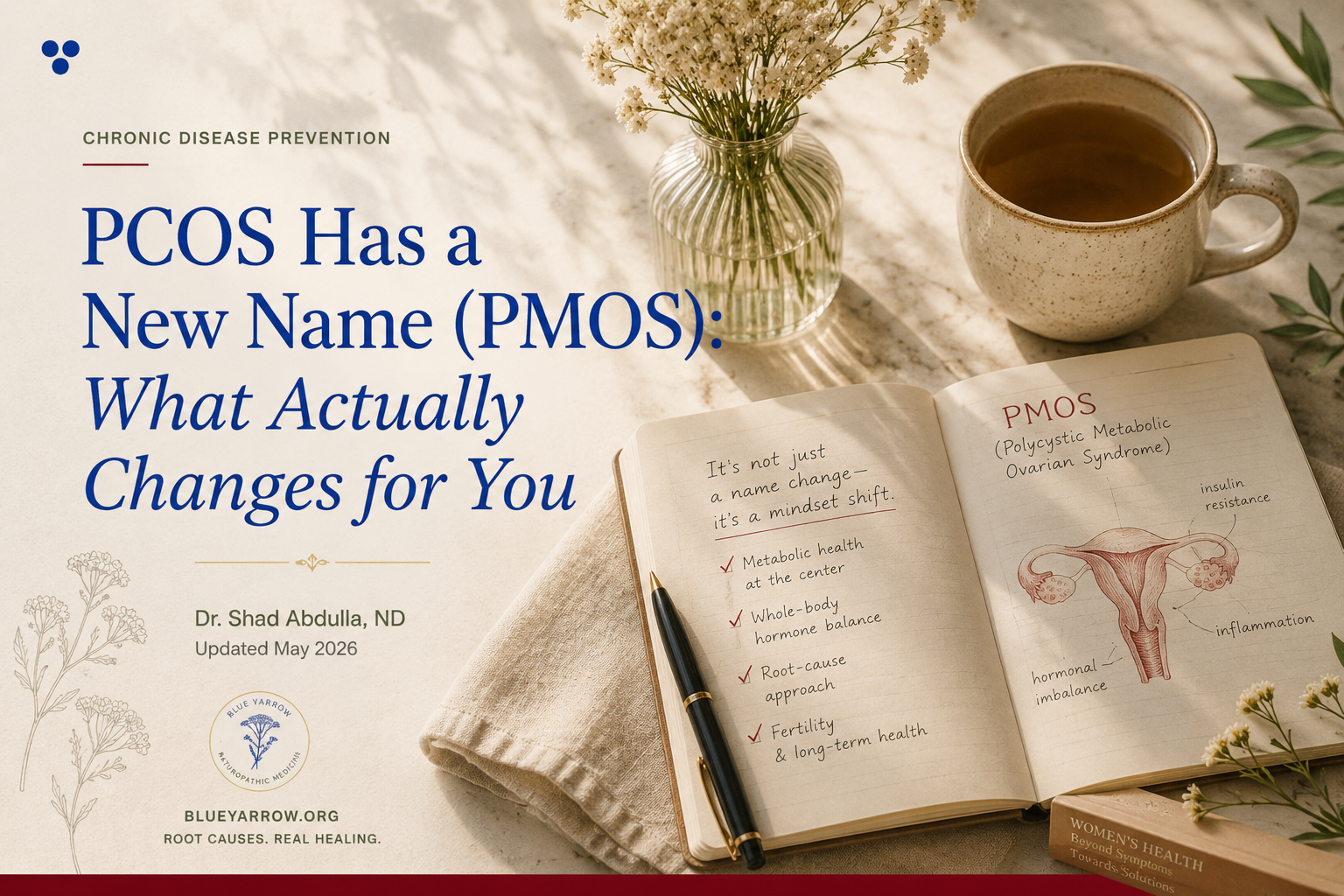
The 2026 Lancet consensus paper renamed PCOS to PMOS — polyendocrine metabolic ovarian syndrome. The diagnostic criteria didn't change. Your existing diagnosis stands. But the rename signals something important: the disease was never just about ovaries. Here's what actually changes for you, what stays the same, and the questions worth bringing to your next appointment.